The Oncology Clinic of FN NR represents a regional oncology center; in its activities, with the support of other departments of the university hospital, it relies on current scientific research findings and applies them in its clinical practice.
In September 2022, the Oncology Department became the Oncology Clinic and, based on its division into 2 departments, provides patient care within the scope of the concepts of the fields of “clinical oncology” (pharmacological oncological treatment) and “radiation oncology” (radiation therapy). Both fields have experienced extraordinary development in recent years and cooperate closely, complement each other, and together create a functioning complex. New radiotherapy modalities have been introduced into treatment, contributing to high precision, maximum gentleness, and universal application. The constant development of new target molecules in clinical oncology fundamentally enriches the therapeutic spectrum of systemic oncological therapy and continues to significantly improve its results.
Multidisciplinary cooperation at the level of other medical and helping scientific fields, which we strive for, is the foundation of modern medical care.
An appointment is required for an examination – RECEPTION: 037/6545 721
Within the Department of Clinical Oncology, in accordance with recommended standards, we provide comprehensive oncology treatment in the form of (or a combination of):
– cytostatic treatment (chemotherapy)
– biological (targeted) therapy
– hormone therapy
– immunotherapy
– active follow-up
– oncology on-call service
– diagnosis and treatment of complications related to oncological disease or its therapy
– care for patients with advanced disease or in terminal stages of malignant disease, psychological counselling and social support for patients and their family circle
– awareness-raising activities in the prevention of malignant diseases
Structure of the inpatient Department of Clinical Oncology
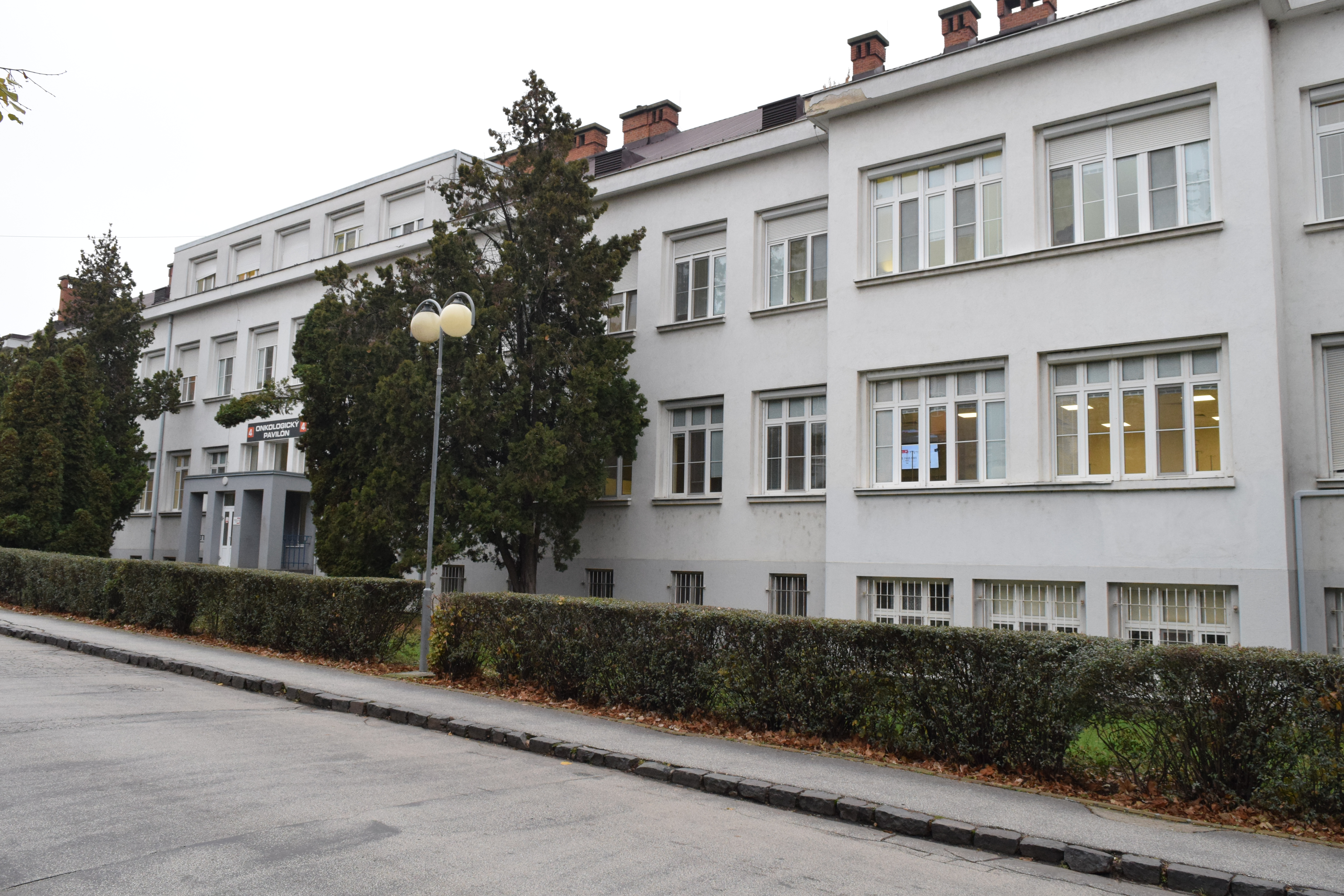
The inpatient Department of Clinical Oncology is located on the first floor of the Oncology Pavilion. In total, it has 22 standard beds and 3 premium rooms (premium rooms for a fee, shared also with the Department of Radiation Oncology, 2 semi-premium rooms €20/night, 1 premium room €30/night).
Equipment of a standard room: electrically adjustable beds, TV, bedside and serving table, wardrobe. Bathroom facilities are not part of a standard room.
Bed allocation:
women’s ward: one 3-bed room, two 2-bed rooms, one 4-bed room
men’s ward: two 2-bed rooms, one 4-bed room, three 1-bed rooms
Meals:in the ward dining room; for immobile patients – meals served at the bedside
In the dining room/kitchenette, patients have access to an electric kettle, microwave, refrigerator, glasses, plates, cutlery, tea.
WIFI:free of charge on the inpatient ward
Library:freely available in the dining room
For admission, please arrive in the morning by 8:00 and report to the admission outpatient clinic, room no. 1, on the ground floor (or to the Radiation Oncology outpatient clinic). You must bring medications you take long-term in original packaging, including the dosing schedule, and special medical supplies (e.g., colostomy, urostomy bags, etc.); please arrange these before admission. A valid insurance card and contact details for relatives are required.
Bring toiletries, personal items, a towel, pyjamas, a bathrobe, and slippers. Do not bring jewellery, valuables, or larger amounts of cash. Smoking and consumption of alcoholic beverages are strictly prohibited on the clinic premises.
Ward round:
minor ward round daily between 7:00–8:00 by the attending ward physician
ward round with the head of department and chief physician 2x weekly at 8:00
– men’s ward – Mondays and Thursdays
– women’s ward – Tuesdays and Fridays
Outpatient section – method of administering specific oncological therapy
We aim to administer treatment according to the patient’s preferences, predominantly on an outpatient basis, which forms the basis of oncology care and allows patients, after a therapeutic cycle or infusion treatment, to be discharged and stay in their home environment during the course of treatment, which increases their comfort. The outpatient chemotherapy unit has 30 adjustable chairs with a call system.
At the patient’s request, or in the event of complications or multi-day treatment, hospitalization within the inpatient section of the department is possible. The majority of specific oncological treatment is administered intravenously, i.e., via infusion therapy into a vein. In some cases, a peripheral venous cannula is sufficient; however, we prefer administration via central venous access.
Central venous access helps patients cope better with treatment, does not burden them with very frequent unpleasant needle sticks, and is a tool for preventing complications during therapy (for more information see the link under Information for patients).
Infusion therapy is administered to patients using special pumps that ensure precise and continuous delivery of oncological therapy.
As stated above, our outpatient clinic is one of the few clinical workplaces in Slovakia equipped with the Paxman device, which cools the scalp and thus reduces blood flow to the hair roots, slowing their metabolism; chemotherapy then affects them to a lesser extent. Use of the Paxman device for scalp cooling to preserve hair during chemotherapy
Radiotherapy (RT) is one of the basic modalities of oncological treatment. During the course of treatment, approximately 60% of oncology patients undergo it. At our workplace, we irradiate 800–1,000 oncology patients per year.
The principle of radiotherapy is the application of ionizing radiation targeted to the tumour area in order to damage and destroy tumour cells.
At our workplace, we use high-energy photon and electron radiation in the treatment of malignant diseases. For the treatment of non-malignant diseases, gamma radiation from the radioisotope caesium 137.
The workplace is equipped with devices enabling highly conformal radiotherapy techniques – 3D CRT (3D conformal RT), IMRT (intensity-modulated radiotherapy), VMAT (volumetric modulated arc therapy), IGRT (image guided radiotherapy – RT guided by imaging – set-up accuracy is checked immediately before irradiation, directly on the treatment couch, using cone beam CT or so-called portal imaging), ABC (irradiation only in a certain phase of the breathing cycle). Preparation of the irradiation plan is carried out using planning CT, with sophisticated planning systems. These means achieve precise irradiation of the required volume with a high dose while maximally sparing surrounding healthy tissues (healthy tissues have a higher capacity for regeneration than the tumour and can recover from a small radiation dose).
Radiotherapy may be indicated preoperatively/postoperatively – to reduce the likelihood of local recurrence of the disease, also as a substitute for surgery – radical RT (with the aim of complete tumour destruction while preserving the affected organ without the need for surgical removal), or also with palliative intent – i.e., not with the aim of completely curing the patient, but to alleviate their difficulties.
Irradiation is applied either alone or in combination with substances that enhance its effect (e.g., together with chemotherapy or biological therapy; these medicines may be in infusion form, sometimes also in tablet form). If infusion therapy is needed during radiotherapy (e.g., due to the above-mentioned combination with chemotherapy), it is administered in the application room, which is located on the same floor as the outpatient radiotherapy tract.
Irradiation may take place either on an outpatient basis oras hospitalization (if required by the patient’s health condition, or if daily commuting from a distant place of residence would be problematic).
For the initial examination in the outpatient clinic, it is necessary to make an appointment (reception: 037/6545 721) and bring complete documentation related to the current disease, imaging examinations (on CD or sent electronically from the workplace where they were performed to the FN Nitra system – PACS), an operation record (if the patient underwent surgery), histology, data on any other treatment applied so far (e.g., chemotherapy), findings from the referring physician, and documentation related to the patient’s other diseases. At the initial examination, the physician will consider the indication for radiotherapy.
Each patient for whom radiotherapy is indicated usually undergoes so-called localization CT 7–14 days before the start of RT, from which the irradiation plan is created. During CT, the patient is positioned exactly as they will be irradiated. Sometimes it is also necessary to produce individual immobilization devices, especially for irradiation in the head and neck area. During CT, most patients have alignment marks drawn on the skin, approximately in the area to be irradiated, which will be used on the day RT starts for correct targeting of the irradiated volume. The marks must be kept from being erased until the start of RT.
Radical radiotherapy is usually applied over several weeks (usually 4–7 weeks); palliative RT usually lasts 1–10 days.
Radiotherapy is mostly applied every working day.
On the day irradiation begins, outpatient patients are assigned their RT appointment time (between 7:00 and 14:00), which they will attend regularly. In the treatment room, the patient spends approximately 10 minutes; the irradiation itself takes much less time. During irradiation, the patient neither sees nor feels the radiation. They do not need to worry about contact with close persons, nor with pregnant women and children.
Once a week during RT, the patient undergoes a check-up in the outpatient clinic no. 2 – the physician evaluates treatment tolerance, addresses any patient difficulties, and, as needed, also indicates blood sampling (no need to come fasting) and checks the irradiation plan.
After completion of irradiation, the patient comes to RT outpatient clinic no. 1 for at least 2 follow-up visits – the first after several weeks (to assess the effect of RT and check regression of signs of acute RT toxicity), the second usually after several months (to assess signs of chronic radiation toxicity). Further follow-up then takes place via the outpatient clinic of the radiation or clinical oncologist; alternatively, the patient continues treatment with their attending clinical oncologist.
Our workplace also provides non-tumour radiotherapy (with the radioisotope caesium 137). The most common indication is degenerative and inflammatory diseases of the musculoskeletal system (e.g., heel spurs, joint osteoarthritis, inflammation of joints, tendons…). The aim of treatment is relief of symptoms. For the initial examination, it is necessary to make an appointment (reception: 037 6 545 721). Bring to the examination the findings from the referring physician (orthopaedist/rehabilitation physician/surgeon). This treatment is administered after at least 4 weeks have passed since a corticosteroid injection was applied to the irradiated area. RT usually lasts one week (usually 3 fractions); on the day of the first outpatient visit, the 1st RT fraction is applied. As this is treatment with ionizing radiation, in patients younger than 40 years, RT is suitable only after failure of other treatment modalities.
Structure of the Department of Radiation Oncology:
Inpatient section– 16 beds on the 1st floor of the building
women’s ward: 2 double rooms, 1 triple
men’s ward: 1 double, 1 triple and 1 quadruple room
Equipment of a standard room: electrically adjustable beds, TV, bedside and serving table, wardrobe.
Bathroom facilities are not part of a standard room.
For a fee, it is possible to be hospitalized in a premium room (single room, electrically adjustable bed, table, armchair, TV, WC, shower). Some premium rooms do not have their own bathroom facilities.
Meals:in the ward dining room; for immobile patients – meals served at the bedside
In the dining room/kitchenette, patients have access to an electric kettle, microwave, refrigerator, glasses, plates, cutlery, tea.
WIFI:free of charge on the inpatient ward
Library:freely available in the dining room
Ward round:
minor ward round daily between 7:00–8:00 by the attending ward physician
chief physician’s ward round 2x weekly at 8:00
– men’s ward – Mondays and Thursdays
– women’s ward – Tuesdays and Fridays
1x weekly ward round with the head of department – Thursdays
Outpatient section – on the ground floor of the pavilion (2 Radiation Oncology outpatient clinics)
An appointment is required for an examination – RECEPTION: 037/6545 721 (call between 7:00–14:12)
Bring to the initial examination – findings from the referring physician, including documentation related to the current disease, including complete histology
– completed imaging examinations (e.g., CT, MRI, PET/CT…) – reports + image documentation either on CD or sent via PACS
Planning andirradiation section
– clinical physics section
– RT planning – physicians
– CT simulator
– 4 treatment rooms
Our workplace is equipped with
a Siemens Confidence 64 RT Pro CT simulator (year of installation 2020) for radiotherapy CTs. It is equipped with the SW IMAR system to suppress metal artefacts.
the Monaco planning system for planning external radiotherapy (2020)
3 Elekta linear accelerators: Versa HD (2020), Precise (2015), Infinity (2023)
On 2 linear accelerators, a treatment couch with 6 degrees of freedom is installed for more precise patient positioning
1 radioisotope 137 Cs device for non-tumour radiotherapy
The Oncology Clinic of FN Nitra has one of the UNIQUE patient counselling services NO TO CANCER within hospitals in Slovakia.
The patient counselling service operates regularly every Wednesday from 8:00 to 12:00 on the 2nd floor. With the help of excellent volunteer counsellors (who have successfully overcome cancer themselves), it offers a helping hand to people in the most difficult moments of life.
You can also contact the online counselling service: www.nierakovine.sk, or call the free helpline: 0800 800 130
Multidisciplinary teams
Our clinic is actively involved in and contributes to the operation of regular multidisciplinary seminars (a consultation of specialists in the decision-making process regarding the patient’s treatment).
a simpler, lege artis, pathway of patient treatment (one of the main priorities in the care of an oncology patient at the university hospital)
GIT and urology seminar(every Wednesday at 14:30, Meeting room of the Department of Surgery, Surgical Pavilion)–with a surgeon, urologist, gastroenterologist, radiologist, clinical oncologist, radiation oncologist, pathologist (more info: MUDr. Gura, MUDr. Miškovičová, MUDr. Rybárová, MUDr. Tomčová), booking: by physician via emailmiskovicova@fnnitra.sk
Mammo seminar(every 2 weeks on Mondays at 13:15, Meeting room of the Department of Surgery, Surgical Pavilion)–with a radiologist, surgeon, plastic surgeon, clinical oncologist, pathologist (more info: MUDr. Gura, MUDr. Miškovičová)
On Mondays when the mammo seminar is not held: Counselling service for the treatment of women with breast cancer (from 13:15, Clinical Oncology Outpatient Clinic III., 6th floor) – MUDr. Gura, MUDr. Miškovičová; booking via reception: 037/ 6545 721
Contacts
The area code before the extension is 037 / 6545 + extension
Head of department
MUDr. Michaela Miškovičová, PhD.
925,790
Chief physician of the Department of Clinical Oncology
MUDr. Zuzana Tomčová
908,137
Chief physician of the Department of Radiation Oncology
MUDr. Oľga Miklóssyová
471
Head nurse
Mgr. Andrea Čižmáriková
470
meeting room
543
clinical psychologist
Mgr. Demešová
621
Department of Clinical Oncology
Inpatient Section
women’s section – physician
460
women’s section – nurse
381
women’s dining room
782
men’s section – nurse
274
men’s section – physicians
788
Department of Radiation Oncology
Men’s ward – nurses
274
Men’s ward – physicians
788
Women’s ward – nurses
381
Women’s ward – physicians
460
Linac 1
298
Linac 2
531
Linac 3
196
Planning physicians
402
Planning physicists
896
Lead physicist – office
Ing. Anton Krkošek
197
application room of the outpatient chemotherapy unit
121
application room of the haematology outpatient clinic
To provide the best possible experience, we use technologies such as cookies to store and/or access device information. Consenting to these technologies allows us to process data, such as browsing behavior or unique IDs on this site. Withholding or withdrawing consent may adversely affect certain features and functions.
Functional
Always active
Technical storage or access is strictly necessary for the legitimate purpose of enabling the use of a specific service explicitly requested by the subscriber or user, or for the sole purpose of carrying out the transmission of a communication over an electronic communications network.
Presets
Technical storage or access is necessary for the legitimate purpose of storing preferences that are not requested by the subscriber or user.
Statistics
Technical storage or access that is used exclusively for statistical purposes.Technical storage or access that is used exclusively for anonymous statistical purposes. Without a subpoena, a voluntary compliance on the part of your internet service provider, or additional records from a third party, information stored or retrieved for this purpose alone cannot generally be used to identify you.
Marketing
Technical storage or access is required to create user profiles to send advertisements or to track the user across a website or multiple websites for similar marketing purposes.