

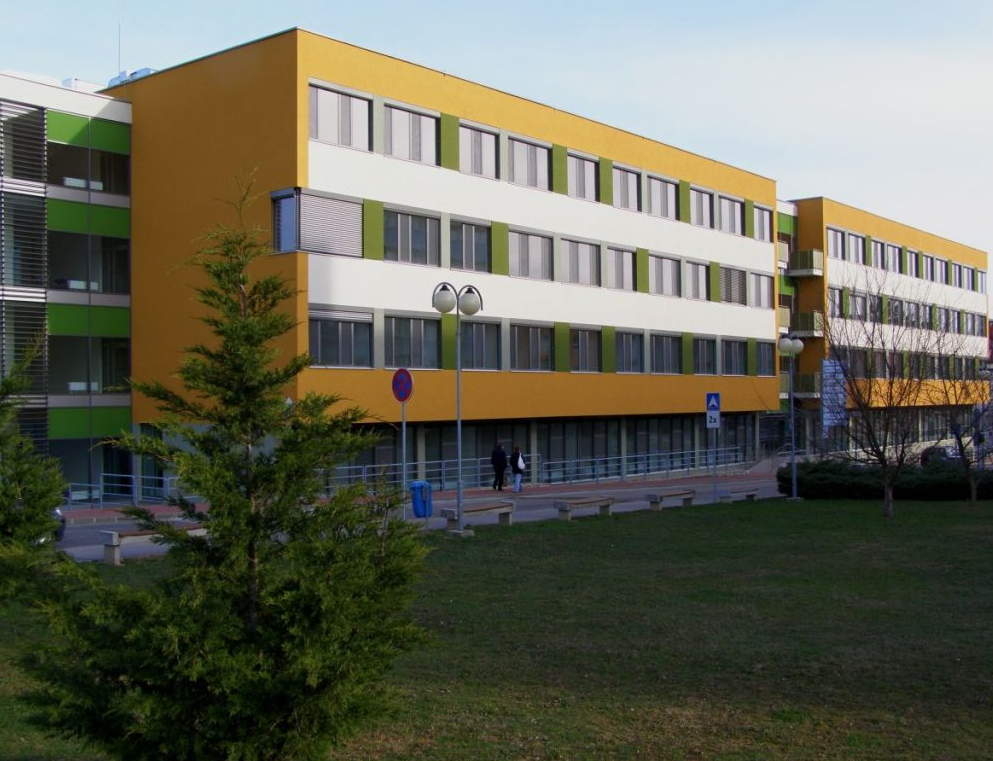
Department of Clinical Microbiology

The Department of Clinical Microbiology is a modernly equipped laboratory diagnostic facility of FN Nitra. It provides microbiological diagnostics for infectious diseases and their complications in hospital, outpatient, and primary outpatient care. It offers consultative services focused on their treatment, prophylaxis, and prevention. It also addresses the control of antibiotic resistance within the hospital and the community.

In 2007, the Department of Clinical Microbiology obtained SNAS (Slovak National Accreditation System) Certificate of Accreditation No. M-015, in accordance with the requirements of the ISO/IEC 17025:2005 standard. The facility participates in regular international external quality control by EQC Labquality Finland and national quality control through the Public Health Authority of the Slovak Republic (ÚVZ SR), NRC for antibiotics.

Main responsibilities of the expert staff:

  • Bacteriological, mycological, parasitological, and virological diagnostics of infectious diseases
  • Consultations on antibiotic selection
  • Surveillance and control of antibiotic resistance in the hospital and the community
  • Control of hygienic regimen in clinics and departments by examining environmental swabs

List of new above-standard examinations of the Department of Clinical Microbiology, FN

QuantiFERON test – identification of latent forms of tuberculosis
Detection of Clostridium difficile toxin A
Detection of Clostridium difficile toxin B

Direct antigen detection
 RSV (nasopharyngeal swab)
 Influenza A, B (nasopharyngeal swab, sinus lavage)
 Rotaviruses (stool)
 Adenoviruses (stool)
 Giardia lamblia (stool)
 Helicobacter pylori (stool)

Detection of papillomavirus “high risk” HPV (swab from the endocervical canal in a special transport
medium, which the laboratory will provide on request)
 Noroviruses Ag (stool)
 Campylobacter jejuni Ag (stool)
 HEV infection with hepatitis E virus – anti-HEV testing by immunochromatographic method and ELISA test
 Malaria Ag, Ab (blood, serum)
 DENGUE fever Ab (blood, serum)
 Tetanus Ab (blood, serum)

Serological examinations of the Department of Clinical Microbiology, FN Nitra

Virological serology:

HAV – hepatitis A virus infection:
 anti-HAV IgM

HBV – hepatitis B virus infection:
 HBsAg
 HBsAg – confirmatory test
 Anti-HBc total
 HBc IgM
 anti-HBs

HCV – hepatitis C virus infection:
 anti-HCV

HIV – infection with human immunodeficiency viruses
(HIV-1, HIV-2):
 anti-HIV 1/2 (EIA)
 anti-HIV 1/2 + p24 Ag (VIDAS)

HSV – infection with herpes simplex viruses (HSV-1, HSV-2):
 anti-HSV 1/2 IgM
 anti-HSV 1/2 IgG

VZV – varicella-zoster virus infection:
 anti-VZV IgM
 anti-VZV IgG

CMV – cytomegalovirus infection:
 anti-CMV IgM

EBV – Epstein-Barr virus infection:
 heterophile antibodies:
o Paul-Bunnell reaction
 specific antibodies:
o anti-EBNA EBV IgG
o anti-EBNA EBV IgM
o anti-VCA EBV IgA
 latex agglutination for rapid detection of infectious mononucleosis

Rubella virus:
 anti-Rubella IgM

Tick-borne encephalitis virus (TBE)
 anti-TBE IgM
 anti-TBE IgG

Bacteriological serology:

Syphilis:
 non-specific antibodies:
o RRR test (rapid reagin test)
 specific antibodies:
o anti-Treponema pallidum (TPHA)

Borrelia:
 B. burgdorferi s. lato IgM (EIA)
 B. burgdorferi s. lato IgG (EIA)
 Western blot B. garinii IgM
 Western blot B. garinii IgG
 Western blot B. afzelii IgM
 Western blot B. afzelii IgG

Helicobacter pylori:
 anti-H. pylori IgG (EIA)
 anti-H. pylori IgA (EIA)

Anthropozoonoses (agglutination reactions):
 anti-Listeria monocytogenes
 anti-Francisella tularensis
 anti-Brucella abortus
 anti-Yersinia enterocolitica

Salmonellosis:
 Widal reaction

Pertussis and Parapertussis (agglutination reactions):
 anti-Bordetella pertussis
 anti-Bordetella parapertussis

Chlamydia:
 Chlamydia pneumoniae IgG, IgA (EIA)
 Chlamydia trachomatis IgG, IgA (EIA)
 Chlamydia trachomatis antigen PCR

Mycoplasmas:
 anti-Mycoplasma pneumoniae IgM (EIA)

Leptospira:
 anti-Leptospira Ag pool (KFR)
 anti-Leptospira sp. (EIA)

Serological diagnostics in parasitology:
 Toxoplasmosis
o EIA IgM
o EIA IgG
o IgG avidity

Parasitological examinations – Department of Clinical Microbiology, FN Nitra

Culture examinations:
 Trichomonas vaginalis

Coprological examinations:
 Helminthological
 Protozoological

Diagnostics of ectoparasites:
 Sarcoptes scabiei and other ectoparasites
Direct detection of Giardia lamblia antigen from stool

Mycological examinations

1) Microscopic and culture examinations for dermatophytes:
 skin scales, skin scrapings
 nails
 hair, body hair

2) Microscopic and culture examinations for yeasts:
 tonsil swab
 nasal swab
 nasopharyngeal swab
 laryngeal swab
 tongue swab
 buccal mucosa swab
 aspirate from puncture of the paranasal sinuses
 sputum
 bronchoalveolar lavage
 transtracheal aspirate
 conjunctival sac swab
 external auditory canal swab
 skin swab
 wound swab
 surgical material
 abscess punctate
 punctate from effusion in cavities
 cerebrospinal fluid
 blood for hemoculture
 urine
 urethral swab
 prostatic secretion
 ejaculate
 cervical swab
 vaginal swab
 amniotic fluid
 rectal swab
 stool

Determination of susceptibility to antimycotics:
 Disk diffusion method
 E-test (fluconazole, voriconazole, posaconazole, echinocandins)
 fungitest

Bacteriological examinations of the Department of Clinical Microbiology, FN Nitra

Culture (aerobic, microaerophilic, anaerobic) and microscopic examinations
 tonsil swab
 nasal swab
 nasopharyngeal swab
 laryngeal swab
 tongue swab
 buccal mucosa swab
 pus from periodontal pocket
 aspirate from puncture of the paranasal sinuses
 sputum
 BAL
 transtracheal aspirate
 conjunctival sac swab
 swab from ulcus corneae
 pus from the ear
 skin swab
 wound swab
 catheters and drains
 central venous catheter
 surgical material
 tissues
 abscess punctate
 punctate from effusion in cavities
 cerebrospinal fluid
 blood for hemoculture
 gastric mucosa for Helicobacter pylori
 urine
 urethral swab
 prostatic secretion
 ejaculate
 cervical swab
 vaginal swab
 amniotic fluid
 rectal swab
 stool

Contacts

The area code before the extension is 037 / 6545 + extension

Head of Department prof. MUDr. Anna Líšková, PhD. 700
Deputy Head of Department MUDr. I. Kusendová, PhD. 733
VŠ office 718


Head laboratory technician Mgr. Mária Šaturová 716
Receipt of biological material 722
Immunoserology unit 731
Unit of anaerobic infections, hemocultures 713
Unit of urinary tract infections and clinical bacteriology, intestinal bacterial infections 724
Unit of upper and lower respiratory tract infections 726
Unit of medical parasitology and mycology 739
PCR diagnostics unit 739

Our Team